
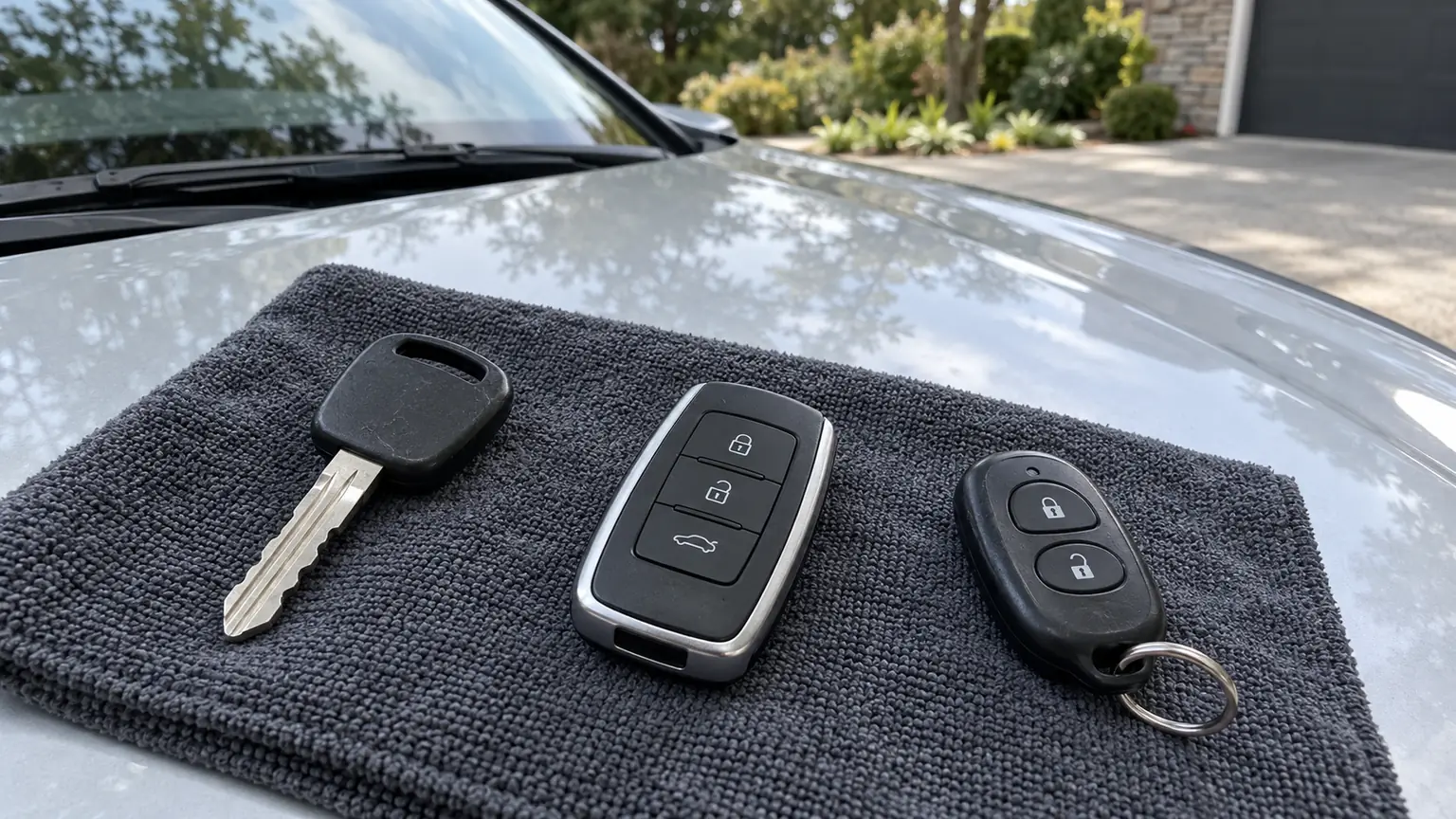
Two drivers can own vehicles from the same manufacturer and still have completely different car keys.
One inserts a metal key into the ignition. Another presses a remote button to unlock the doors before turning a key. A third leaves the key in a pocket and starts the engine with a button.
All three may describe what they carry as a key fob, but the technology behind each system is different.
The main difference between a transponder key, smart key, and key fob is how each communicates with the vehicle and what functions it controls. A transponder key provides electronic engine-start authorization, a smart key supports proximity-based access and starting, and a conventional key fob typically operates remote functions such as locking and unlocking doors.
These categories can overlap. One physical key may combine several technologies.
Understanding those differences matters when you need a spare, lose your only key, or want to avoid purchasing an incompatible replacement.
Compare the Three Key Types at a Glance
| Feature | Transponder key | Smart key | Conventional remote key fob |
|---|---|---|---|
| Main purpose | Engine-start authorization | Proximity access and starting | Remote door and vehicle functions |
| Typical appearance | Metal blade with chip in plastic head | Electronic fob, often without exposed blade | Button-operated remote |
| Unlocking method | Mechanical blade; remote if equipped | Proximity sensor or remote buttons | Remote buttons |
| Starting method | Usually insert and turn key | Usually push-button start | Depends on separate or integrated key |
| Battery requirement | Passive chip generally needs none | Usually battery-powered | Usually battery-powered |
| Programming | Immobilizer registration | Vehicle-specific smart key registration | Remote pairing; immobilizer programming if integrated |
| Replacement complexity | Cutting and possible programming | Compatibility and electronic programming | Remote pairing, possibly key cutting |
The table describes common arrangements rather than every vehicle configuration.
A Transponder Key Still Looks Like a Traditional Car Key
A transponder key combines a mechanical blade with an electronic security credential.
The blade fits the vehicle’s ignition cylinder, while a chip embedded in the key head communicates with the immobilizer.
The vehicle must recognize the electronic credential before permitting engine operation.
That means a newly cut blade can turn the ignition without successfully starting the car.
Transponder keys became common as manufacturers introduced electronic immobilizers to make unauthorized engine starting more difficult.
Many conventional transponder chips are passive, receiving the energy needed for authentication from the vehicle rather than a replaceable battery.
Some transponder keys also contain remote-locking buttons. In those designs, the remote and immobilizer functions may operate independently.
A dead remote battery therefore doesn’t necessarily prevent the transponder from starting the vehicle.
The exact behavior depends on the manufacturer and key design.
A Smart Key Changes How You Enter and Start the Car
A smart key is commonly associated with passive entry and push-button ignition.
Instead of inserting a blade, the driver carries an electronic credential that the vehicle detects when it is nearby or inside the cabin.
On compatible vehicles, touching the door handle may unlock the car without pressing a remote button.
Once inside, the driver can start the engine using the start button, provided the vehicle recognizes an authorized key.
The system uses vehicle antennas and electronic authentication to determine whether the credential is present in an appropriate location.
That doesn’t mean the key works at unlimited distance.
Proximity systems are designed around particular detection zones, and performance can be affected by interference, battery condition, and vehicle settings.
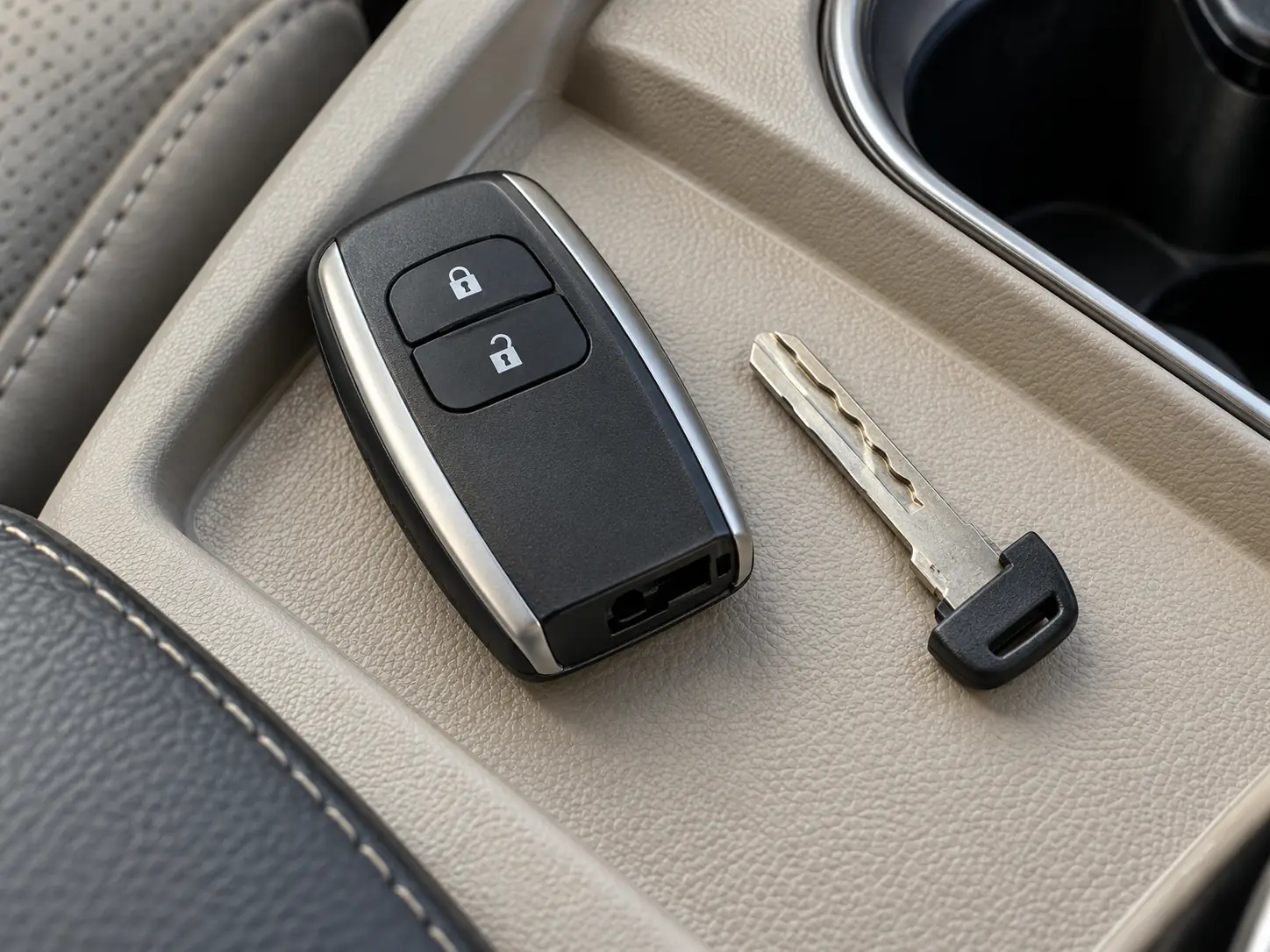
Many smart keys also contain a concealed mechanical emergency key for accessing the vehicle when electronic entry is unavailable.
A smart key offers convenience, but its replacement and programming requirements can be more involved than those of a basic mechanical key.
A Key Fob Usually Refers to the Remote
The term key fob describes a remote-control device rather than one specific engine security technology.
A conventional automotive fob commonly includes buttons for locking, unlocking, opening the trunk, or activating the panic alarm.
Some vehicles also support remote starting or additional features.
The remote communicates wirelessly with the vehicle when the driver presses a button.
However, a standalone remote doesn’t necessarily authorize engine starting.
For example, an older vehicle might have a separate metal ignition key and a small remote attached to the same key ring.
The remote opens the doors, while the ignition key performs the starting function.
Other vehicles combine the remote buttons, metal blade, and transponder chip into one housing.
This overlap explains why people sometimes use key fob and smart key interchangeably, even though their functions differ.
How to Identify Which Car Key You Have
You don’t need to open your key housing to begin identifying its type.
Start with how you normally use the vehicle.
You insert a metal key and turn the ignition: You may have a mechanical key or a transponder-equipped ignition key.
You press buttons to unlock the doors but still insert a key to start: You likely have remote-entry functionality combined with a separate or integrated ignition key.
You leave the key in your pocket and press a start button: Your vehicle probably uses a proximity-based smart key system.
These observations are useful, but they don’t prove the exact electronic specification.
A thick plastic key head doesn’t guarantee that a transponder is present, and two remotes with identical shapes may use different electronics.
The most reliable identification comes from the vehicle’s year, make, model, trim, and manufacturer documentation.
A qualified automotive locksmith can also check compatibility using appropriate equipment.
Remote-Head Keys and Flip Keys Complicate the Labels
Not every vehicle key fits neatly into one category.
A remote-head key combines remote buttons and a metal ignition blade in a single housing.
The blade may also contain a transponder credential within the key head.
A flip key, sometimes called a switchblade key, folds its metal blade into the remote housing when not in use.
That folding design is primarily about convenience and storage.
It doesn’t establish whether the key uses a transponder or which programming method is required.
A proximity smart key may likewise include a hidden emergency blade.
The important distinction is between the physical housing and the electronic functions.
When ordering a replacement, identify the actual technology instead of relying on descriptions such as “flip remote” or “push-button key.”
Which Car Keys Need Programming?
Programming requirements depend on the electronic functions involved.
A traditional mechanical-only key generally needs accurate cutting but no electronic registration.
A transponder-equipped key may need both cutting and immobilizer programming.
A standalone remote may require pairing with the vehicle’s remote-entry system.
A smart key typically requires compatible electronic registration so the vehicle recognizes it for proximity entry and starting.
Some integrated keys require more than one function to be configured.
For example, a replacement may start the engine while its remote buttons remain inoperative.
This doesn’t necessarily mean the entire key is defective.
It may indicate that the remote-entry function hasn’t been configured or that the replacement is incompatible.
Lock & Key Pros provides automotive key and fob programming services for supported vehicles, subject to key-system compatibility.
Why Two Similar-Looking Keys May Not Be Interchangeable
Automotive keys are not universal accessories.
A replacement must match the vehicle’s supported electronic system.
Compatibility can involve the correct transponder type, remote frequency, part specification, and programming requirements.
The blade profile must also match the mechanical lock when a physical key is required.
An online listing that says a remote fits several vehicle models may not cover every trim or production year.
Used smart keys can introduce additional restrictions depending on their original programming and the vehicle manufacturer.
Before purchasing a replacement, verify the exact part compatibility.
An automotive locksmith cannot necessarily program an incorrect or unsupported remote simply because its housing looks right.
What Happens When the Battery Dies?
Battery behavior is one of the clearest differences between these key types.
A conventional passive transponder chip generally operates without its own replaceable battery.
A remote key fob needs battery power to transmit button commands.
A smart key normally uses a battery for its electronic communication functions.
However, many smart key vehicles include a manufacturer-specific emergency procedure for a depleted fob battery.
For example, certain Toyota models allow the driver to hold the electronic key near the engine start switch so the vehicle can recognize it.
That procedure is not universal.
Some smart keys also contain a mechanical blade that allows emergency door access.
Consult your vehicle owner’s manual for the correct method.
If your remote has stopped responding, battery replacement is often worth checking before assuming that programming has been lost.
Is a Smart Key More Secure Than a Transponder Key?
Both technologies can incorporate electronic authentication designed to restrict unauthorized vehicle starting.
Their security depends on the particular implementation, not simply the name of the key.
A transponder system adds an electronic authorization requirement to the mechanical ignition process.
A smart key adds proximity-based convenience and may use more sophisticated communication protocols.
However, proximity systems can face different security risks, including relay attacks against certain implementations.
That doesn’t mean every smart key is vulnerable in the same way or that traditional transponder systems are immune to attacks.
Manufacturers use different protections, and security designs evolve.
For owners, practical precautions include following manufacturer guidance, protecting spare keys, and avoiding unverified replacement devices.
No car key system guarantees complete theft prevention.
What Should You Replace When a Key Stops Working?
The correct replacement depends on which function failed.
If the remote buttons stop working but the engine still starts, the problem may involve the fob battery, switches, or remote electronics.
If a transponder key turns in the ignition but the immobilizer rejects it, the issue may involve electronic recognition.
If a smart key cannot unlock or start the vehicle, the battery, interference, vehicle electrical system, and credential recognition all deserve consideration.
Replacing the entire assembly without diagnosis may be unnecessary.
For a detailed symptom-based checklist, see the related article Why Is My Key Fob Not Working? Common Causes and What to Check.
The key lesson is to identify the failed function before choosing the service.
Replacing a Lost Key Is Different From Making a Spare
When you still have a working key, creating another one may be more straightforward.
The existing key can help identify the correct design and may support certain manufacturer-approved programming procedures.
Losing the only working key changes the situation.
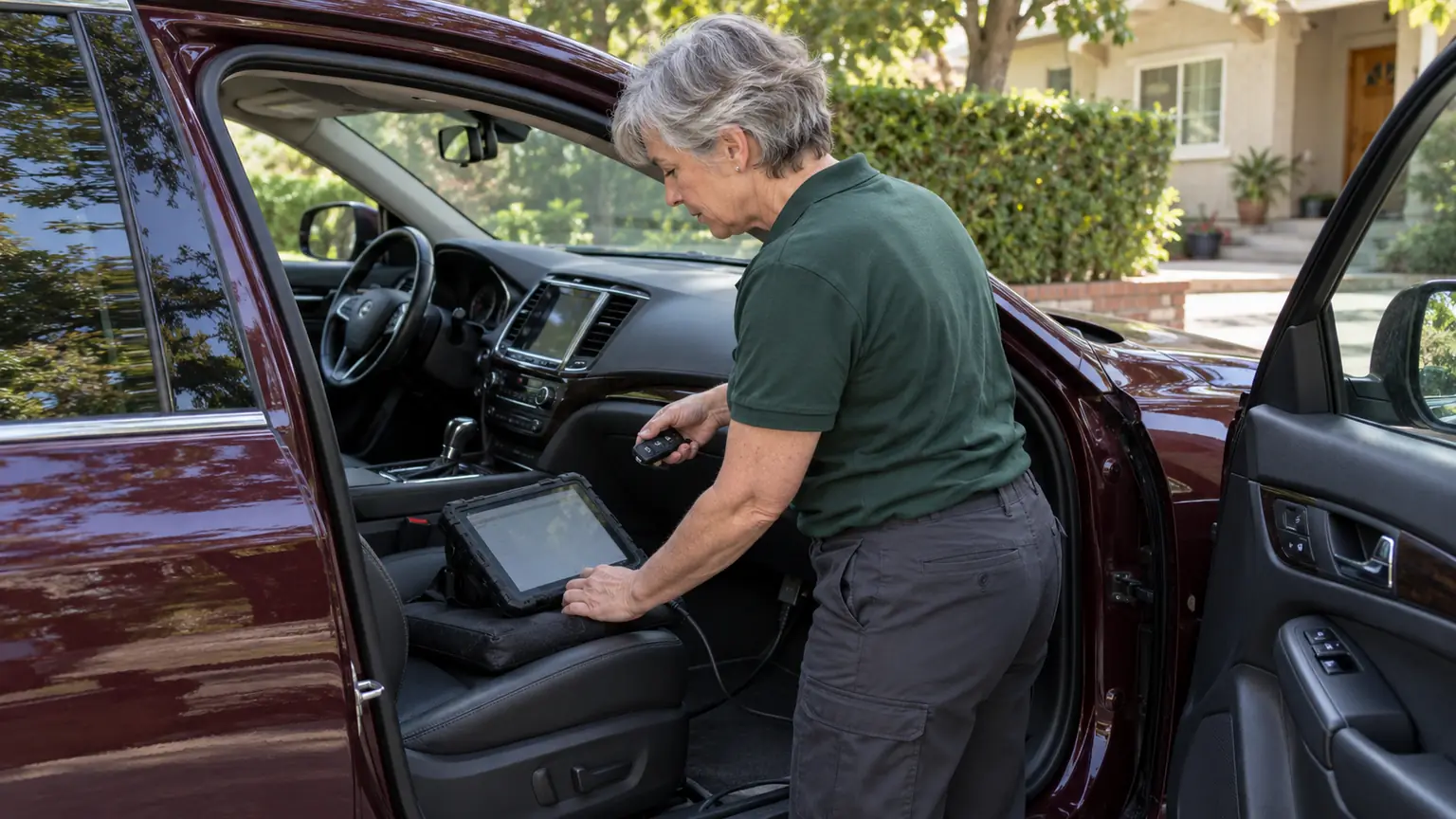
A locksmith may need to establish the correct key specification, create the mechanical blade if required, and register a new electronic credential.
Some vehicles have additional security requirements when no working key remains.
Service availability and complexity vary significantly.
For supported vehicles, Lock & Key Pros offers car key replacement involving cutting or programming as needed.
The business requests vehicle information before confirming the appropriate service.
What Determines the Cost of a Replacement Car Key?
There is no reliable universal price for replacing every transponder key, smart key, or remote.
A basic mechanical replacement can involve different work from an electronic proximity credential.
Pricing may depend on:
- Vehicle year, make, and model.
- Exact key technology and compatible parts.
- Whether a working key remains available.
- Mechanical cutting requirements.
- Electronic programming requirements.
- Emergency access or lockout needs.
- Parts availability and service location.
A smart key may cost more to replace than a simpler key, but the final amount depends on the vehicle and service scope.
Ask for an itemized explanation of parts, cutting, programming, and testing.
Avoid comparing quotes that cover different services.
Questions to Ask Before Booking Key Replacement
A short conversation can prevent ordering the wrong part.
Tell the locksmith whether your vehicle uses a turn-key ignition or push-button start.
Explain whether the current key unlocks the doors, starts the engine, or does neither.
Mention whether you have a spare.
Then ask whether the proposed replacement includes all required functions.
If your original key had remote locking and engine-start authorization, confirm that both will be tested.
You should also ask whether the locksmith supports your specific vehicle and what ownership documentation is required.
A reputable service process should establish authorization before performing security-sensitive work.
Frequently Asked Questions
Is a key fob the same as a smart key?
Not always. A key fob may simply operate remote door functions, while a smart key generally supports proximity-based entry and starting.
Can a transponder key have remote buttons?
Yes. Many vehicle keys combine an immobilizer transponder with remote-locking functions in one housing.
Does a smart key have a transponder?
Smart keys use electronic authentication, but their design isn’t necessarily identical to a conventional passive ignition transponder.
Can a locksmith replace all three types?
Automotive locksmiths may service supported transponder keys, smart keys, and remote fobs. Availability depends on vehicle compatibility, parts, equipment, and authorization requirements.
Which type of car key is best?
There isn’t one best option for every driver. Smart keys offer convenience, while conventional transponder keys provide electronic immobilizer authorization with a familiar ignition process.
Identify the Technology Before Buying Another Key
Transponder keys, smart keys, and key fobs solve different problems, even when their features overlap.
A transponder provides engine authorization. A conventional remote fob controls supported vehicle functions. A smart key allows proximity-based access and starting.
Understanding those distinctions helps you avoid incompatible replacements and unnecessary programming work.
If you need another car key, have lost your only working credential, or aren’t sure what type your vehicle uses, contact Lock & Key Pros.
Visit the automotive locksmith services page with your vehicle’s year, make, model, and current key situation to confirm available replacement and programming options.
- #transponder keys
- #smart keys
- #key fobs